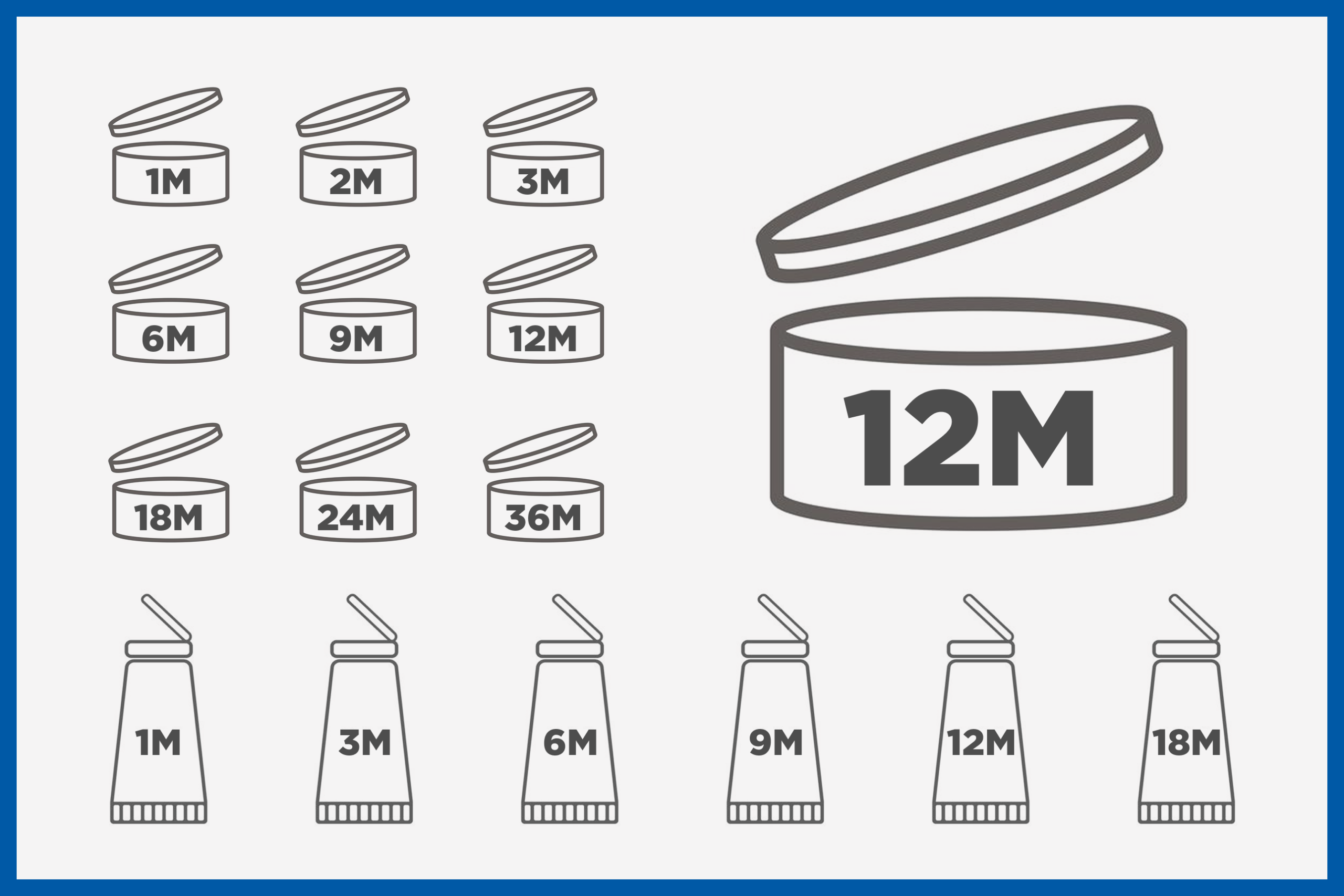
When you develop a pharmaceutical product, medical device, or cosmetic formulation, the question isn’t just whether it works today – it’s whether it will work just as well six months, a year, or two years from now. That’s where stability testing becomes essential.
Stability testing validates that your formulation maintains its safety, efficacy, and quality throughout its entire shelf life. For companies in regulated industries, comprehensive lab testing – including stability studies, shelf-life testing, and microbiological testing – is the scientific foundation that protects patients, supports regulatory submissions, and ensures your products deliver on their promises.
In this guide, we’ll explore why formulation stability matters, how shelf-life and microbiological testing work, and how these practices connect to Good Manufacturing Practices (GMP) and regulatory compliance.
Formulation stability refers to a product’s ability to maintain its chemical, physical, and microbiological properties over time when stored under specified conditions. A stable formulation means:
When formulations are unstable, the consequences can be serious. Active ingredients may degrade, losing their therapeutic effect. Physical changes like separation, discoloration, or changes in viscosity can make products unusable. Chemical degradation can create impurities that pose safety risks. For sterile products, loss of sterility can lead to life-threatening contamination.
The cost of stability failures extends beyond product quality, as well:
Furthermore, formulation stability directly determines expiration dating. Without validated stability data, you can’t assign an expiration date – and without an expiration date, you may not be able to legally market your product. Ultimately, stability testing provides the scientific evidence that your product will remain safe and effective through the end of its labeled shelf life.
Shelf-life testing is the systematic process of evaluating how a product’s quality changes over time under defined storage conditions. This testing validates that products remain within specifications throughout their intended shelf life and supports the expiration dates printed on labels.
There are two primary approaches to shelf-life testing:
Environmental factors play a critical role in product stability:
Container-closure system compatibility is another essential element of shelf-life testing. Products must be tested in the same packaging configuration used for commercial distribution, and that packaging must protect the product from environmental stressors while not interacting with the formulation in ways that could compromise quality. Thorough compatibility studies can evaluate whether packaging provides adequate moisture barriers, light protection, and oxygen exclusion.
The bottom line? Gathering this kind of shelf-life data satisfies regulatory requirements, provides actionable insights for formulation optimization and packaging selection, and leads you to smart storage decisions that improve product performance.
Microbiological testing ensures that products are free from harmful microorganisms or that preservative systems effectively prevent microbial growth throughout the product’s shelf life. For pharmaceutical, medical device, and cosmetic products, microbiological safety is critical because:
Overall, preventing contamination is far more effective than addressing it after the fact. By optimizing preservative systems and implementing proper controls, manufacturers can minimize microbial risks and ensure product safety.
Stability testing, microbiological testing, and validation aren’t conducted in a vacuum. Instead, they must meet rigorous regulatory standards that ensure consistency, reliability, and scientific validity. Here’s a breakdown of some of the most important standards.
Pharmaceutical stability testing follows internationally harmonized standards established by the ICH Q1A(R2) guidelines. These guidelines establish testing protocols and storage conditions recognized by regulatory authorities in the United States, Europe, Japan, and many other countries.
ICH guidelines specify standard storage conditions based on climatic zones:
Stability studies must be conducted on at least three production-scale batches to account for manufacturing variability. Statistical analysis establishes degradation trends, and shelf life is determined based on the 95% confidence limit for the mean degradation curve. This conservative approach ensures that all products remain within specifications through their labeled expiration date.
Good Manufacturing Practices (GMP) – also known as current Good Manufacturing Practices (cGMP) – provide the quality assurance framework that governs how stability testing, microbiological testing, and validation are conducted.
For pharmaceutical manufacturers, GMP compliance is governed primarily by 21 CFR Part 211. These regulations ensure that drug products maintain their identity, strength, quality, and purity throughout their shelf lives. Pharmaceutical GMP requires rigorous stability testing under defined storage conditions to establish appropriate expiration dates and ensure active ingredients maintain their potency.
Medical device manufacturers operate under the Quality System Regulations detailed in FDA 21 CFR Part 820. Many manufacturers also pursue ISO 13485 certification, which aligns with FDA requirements while facilitating global market access. For medical devices, GMP includes process validation, sterilization validation, and shelf-life validation to ensure products maintain sterility and functionality.
The Modernization of Cosmetics Regulation Act (MoCRA) brought cosmetic manufacturing closer to pharmaceutical-level oversight. While cosmetics aren’t subject to pre-market approval, manufacturers must demonstrate product safety through documented testing, including stability testing and preservative effectiveness validation.
Over-the-counter products containing active pharmaceutical ingredients are regulated as drugs and must comply with pharmaceutical GMP requirements. This means sunscreens, topical pain relievers, and oral care products with therapeutic claims must meet the same stability testing standards as prescription pharmaceuticals.
For all types of products and consumables, current good manufacturing practices ensure that stability testing is conducted under controlled conditions, with validated methods, proper documentation, and appropriate quality oversight. This framework provides confidence that test results are reliable, reproducible, and suitable for regulatory submissions.
Comprehensive stability testing requires validated analytical methods that can detect and quantify changes in product quality over time.
Chemical testing forms the foundation of many stability programs, using analyses such as:
Meanwhile, physical testing evaluates attributes that affect product performance and patient acceptance with tests like:
In addition, certain products may require advanced analytical techniques, which provide the sensitivity and specificity needed for stability testing. These can include:
All of these validated methods generate the data needed to establish shelf life, support regulatory submissions, and ensure products maintain their quality from manufacturing through patient use.
Prioritizing robust stability testing and microbiological testing delivers significant returns, such as:
As you can see, comprehensive lab testing isn’t just about compliance. It’s also about building quality into your products from the start and maintaining that quality throughout the product lifecycle.
At Multi-Pack Solutions, quality begins in the laboratory and extends through every step of manufacturing. Our in-house analytical chemistry and microbiology labs provide the foundation for GMP-compliant operations, enabling integrated services that streamline product development and support regulatory submissions.
Our Greenville, South Carolina, facility operates as a cGMP-compliant manufacturing site with ISO 13485:2016 certification for medical device manufacturing. We’re FDA-registered as both a Medical Device and Drug Establishment, which means our quality systems meet rigorous standards for regulated products across multiple industries.
Our comprehensive stability testing capabilities include:
Our microbiological testing services encompass:
We also support formulation optimization for stability, working proactively during development to improve stability through pH adjustment, antioxidant addition, preservative system modification, or base formulation changes.
Crucially, our turnkey approach integrates formulation development support, manufacturing, laboratory testing, and packaging into a seamless workflow. When all services are co-located and managed by a single team, projects move faster, quality is more consistent, and accountability is clear.
At Multi-Pack Solutions, we bring more than 35 years of experience in contract manufacturing and packaging for regulated industries. Our integrated approach combines in-house laboratory capabilities, cGMP manufacturing, and comprehensive packaging services, and our turnkey model means you work with a single partner who understands your product from molecule to market.
Ready to strengthen your stability testing program and advance your product development? Contact Multi-Pack Solutions today to discuss how our integrated laboratory services can support your next product launch.
